Swords Into Plowshare: Recast | Reclaim
In December of 2021, after years of activist work to update Virginia state law, Charlottesville’s City Council accepted the JSAAHC’s Swords Into Plowshares (SIP) project to take possession of the Robert E. Lee statue. The proposal also signed by 23 local groups and individuals, draws inspiration; ion from the prophetic vision of Isaiah 2:4, which celebrates a moment of peace and community -building when “swords are turned into plowshares and spears into pruning hook.”
Over the last five years SIP has transformed the statue’s bronze into sculpture-grade ingots, developed the next phase of its public engagement, and identified three semi-finalist design teams. Swords Into Plowshares: Recast | Reclaim, represents these efforts, and invites the public to move the project forward by offering their comments on the concept drawing submitted by the design groups: Hood Design Studio, MASS Design Group and PUSH Studio. In this way we continue our goal to transform symbols of historic trauma into an artistic expression of democratic values and inclusive aspirations.
Swords Into Plowshares is made possible through the generous support of Andrea Douglas & Vincent Derquenne, Andrew Block, Anne and Gene Worrell Foundation, Claire Antone Payton & Jonathan M. Katz, CACF, Harold and Mary Donn Jordon, JRLS Family Fund, Paul and Kim Yeaton, Southern Power Fund, The Brick, The FUNd, Thomas Jefferson’s Monticello, UVA Memory Project, Virginia Humanities, and contributors to the JSAAHC annual fund. Special thanks is owed to Jordy Yager, Anne Chesnut and the Swords Into Plowshares Advisory Board.
Recast
“While some people obviously see Lee and Jackson as symbols of white supremacy, others see them as brilliant military tacticians or complex leaders in a difficult time…I don't think I can infer that a historical preservation statute was intended to be racist... Certainly (racism] was on their minds, but we should not judge the current law by that intent.”
Richard E. Moore,
Charlottesville Circuit Court Judge
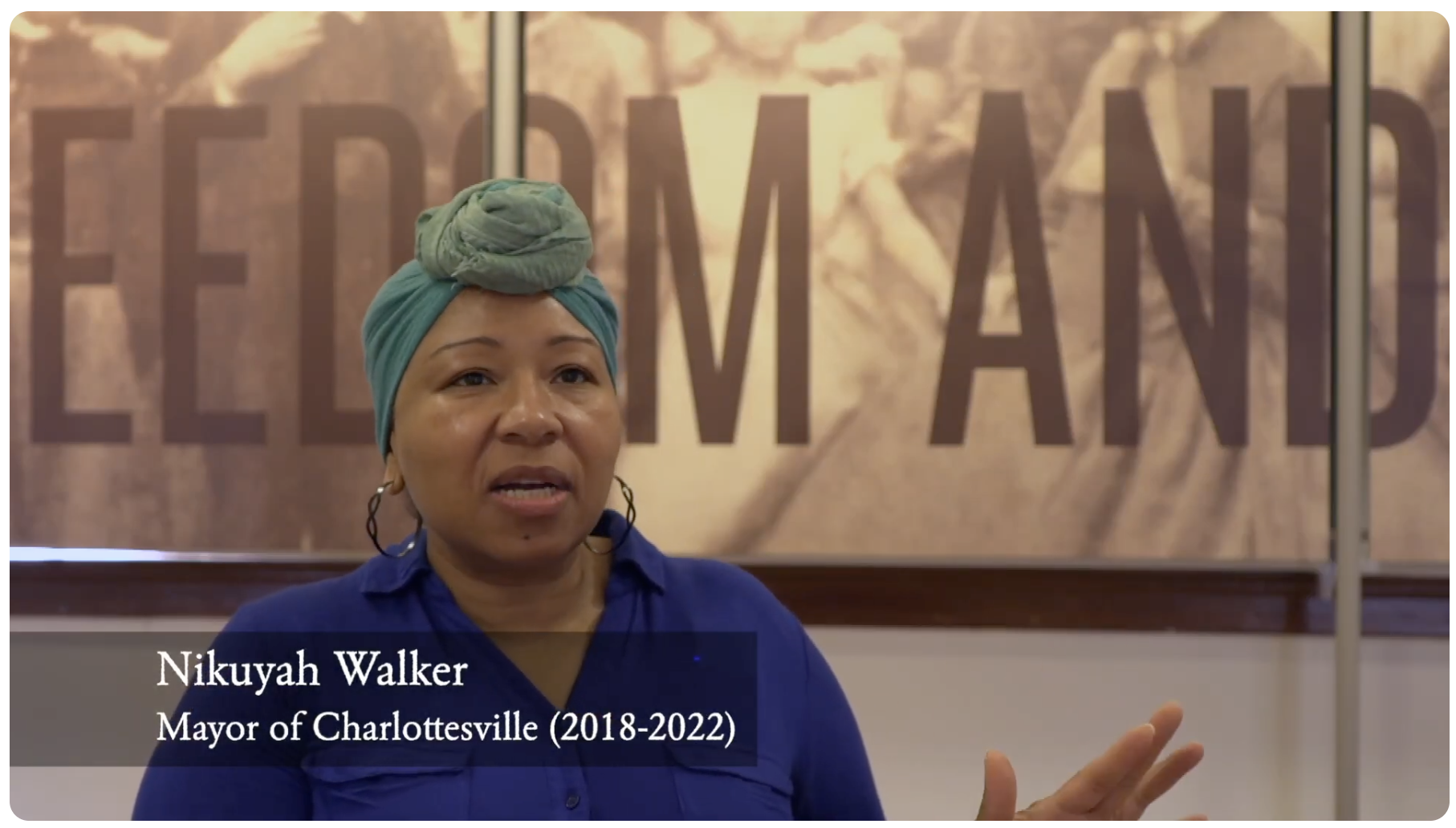
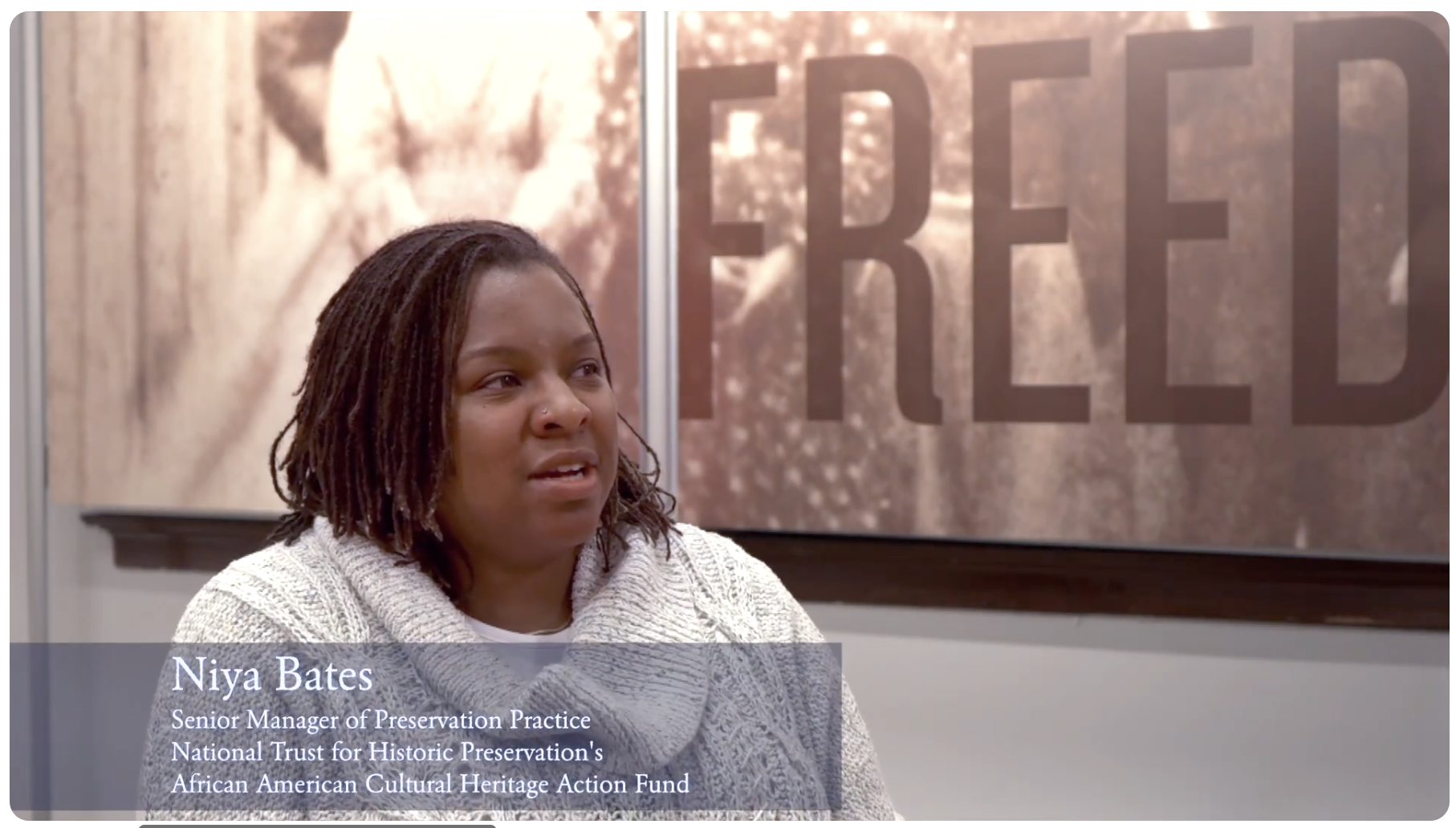
“I grew up seeing those parks as spaces where we didn't spend time—we being Black people—in Charlottesville…So, to see the symbols of division and separation, and exclusion removed from our parks was a really special moment…Because it represents an opportunity to write a different narrative of who we are as a community and what we want to be as a community and as a nation.”
Niya Bates,
Charlottesville Native, Public Historian
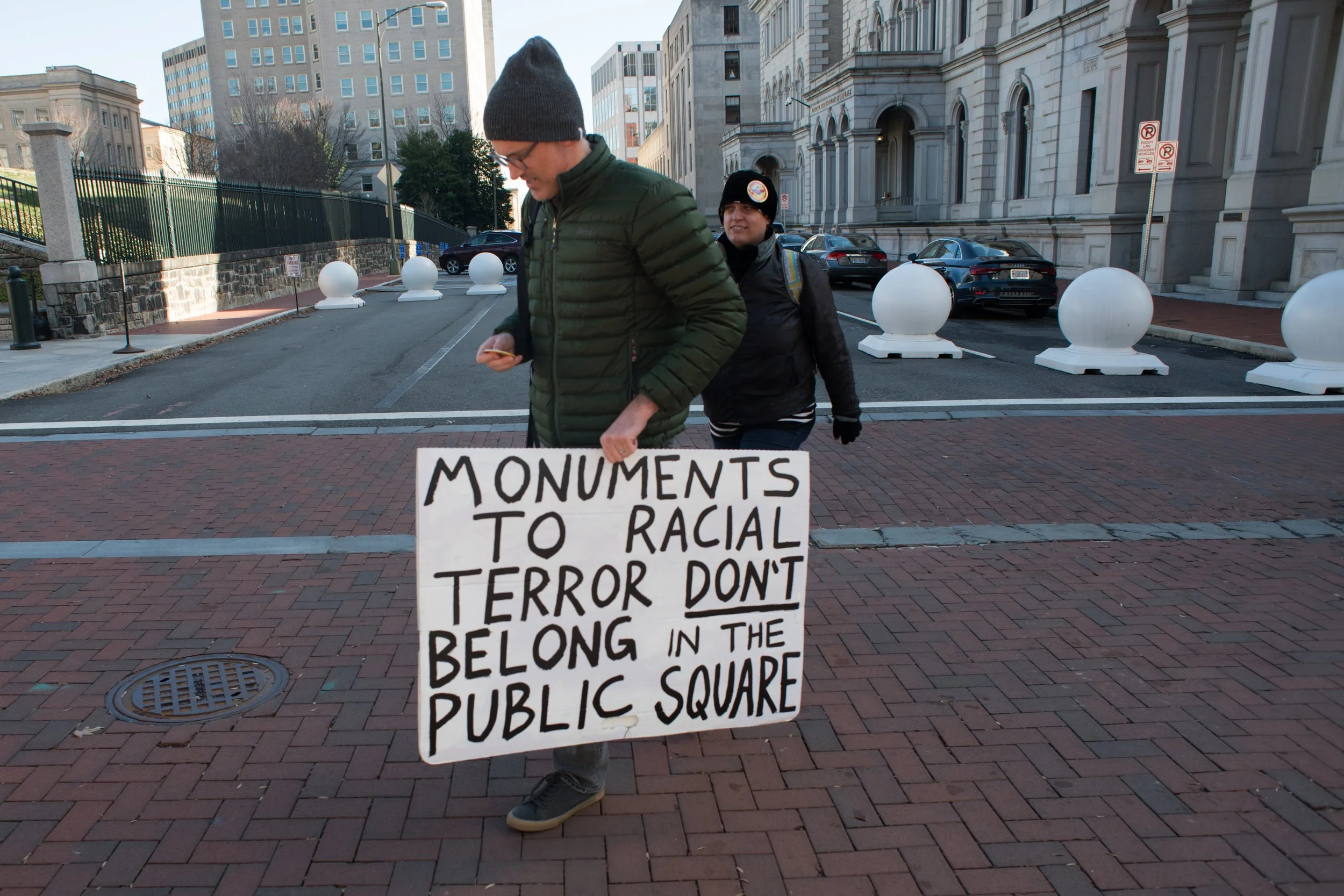
The hand-lettered sign in this photo, “Monuments to racial terror don’t belong in the public square”, captures the urgency that shaped Swords into Plowshares. In 2020, as White nationalist activity surged, Charlottesville activists joined the Virginia Take ’Em Down movement to form Monumental Justice. Together they lobbied the General Assembly in Richmond to change the law governing the removal of Confederate monuments. The demand was both moral and practical: give localities clear authority.
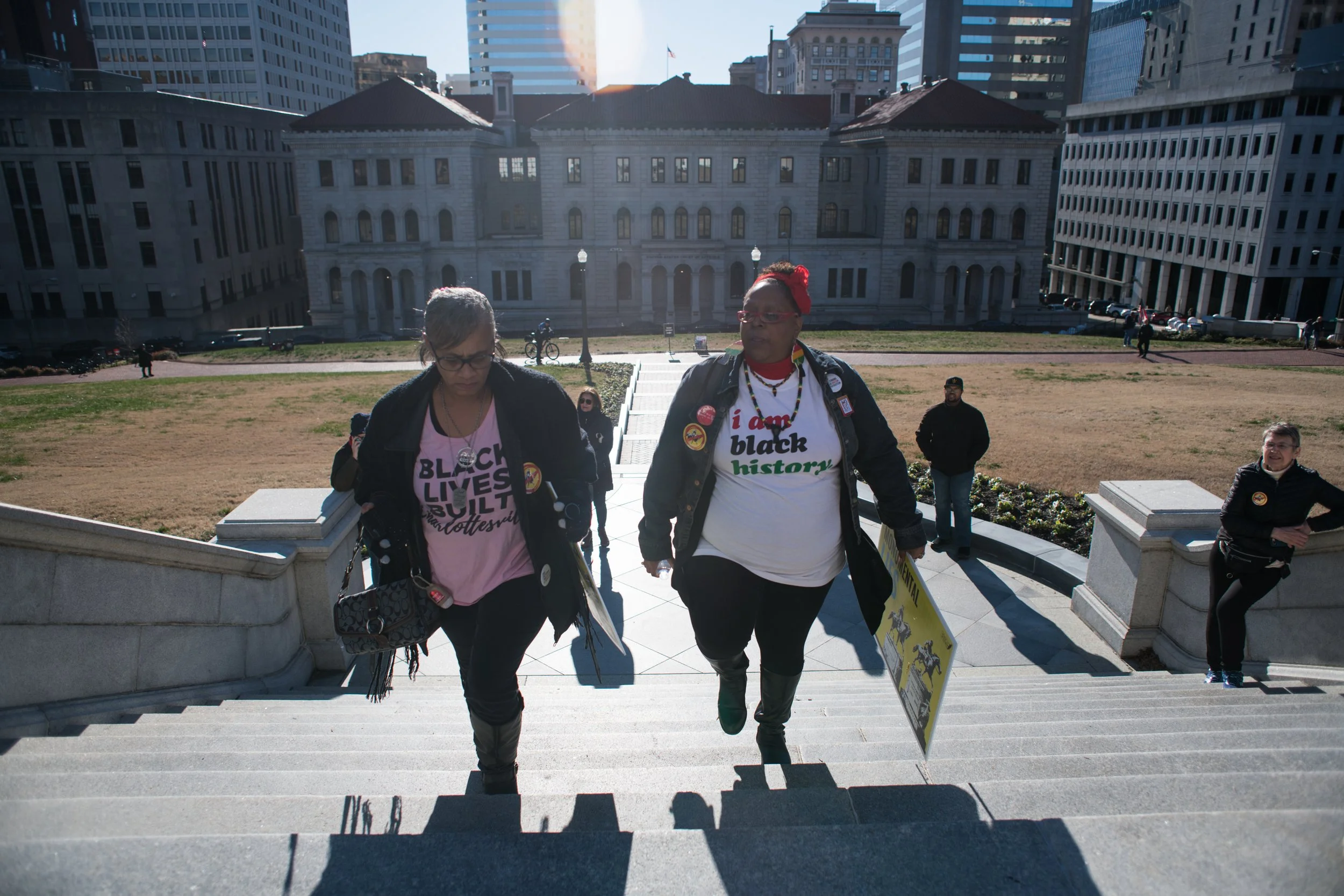
In September 2019, two years after the Unite the Right violence erupted around the Lee statue, Judge Richard E. Moore ruled that removing it would violate Virginia law and issued a permanent injunction. Local activists like Katrina Turner and Rosia Parker, pictured here, brought the fight to Richmond. Their push for change built on Zyahna Bryant’s 2016 petition and Charlottesville’s Blue Ribbon Commission report, which named the harm of Confederate statues.
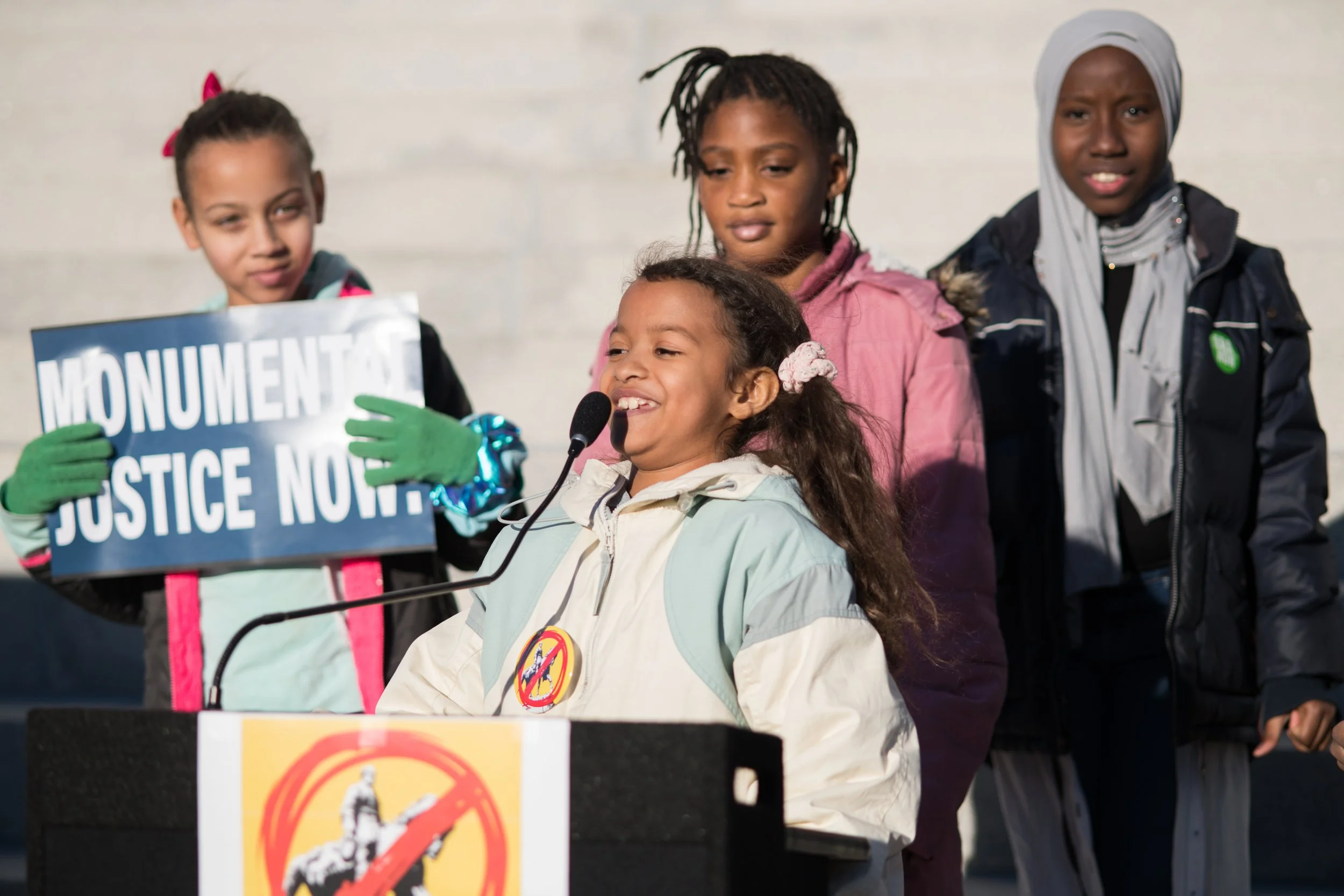
Communities brought their voices to the General Assembly. In 2020, Del. Jay Jones and Sens. Creigh Deeds and Mamie Locke carried HB 1537 and SB 183, bills that would allow localities to “remove, relocate, contextualize, or cover any such monument or memorial located on the locality’s public property.” The bills passed 52–44 in the House, and 23–16 in the Senate. Activists who lobbied for the bill included young people who would benefit from the change in the law.
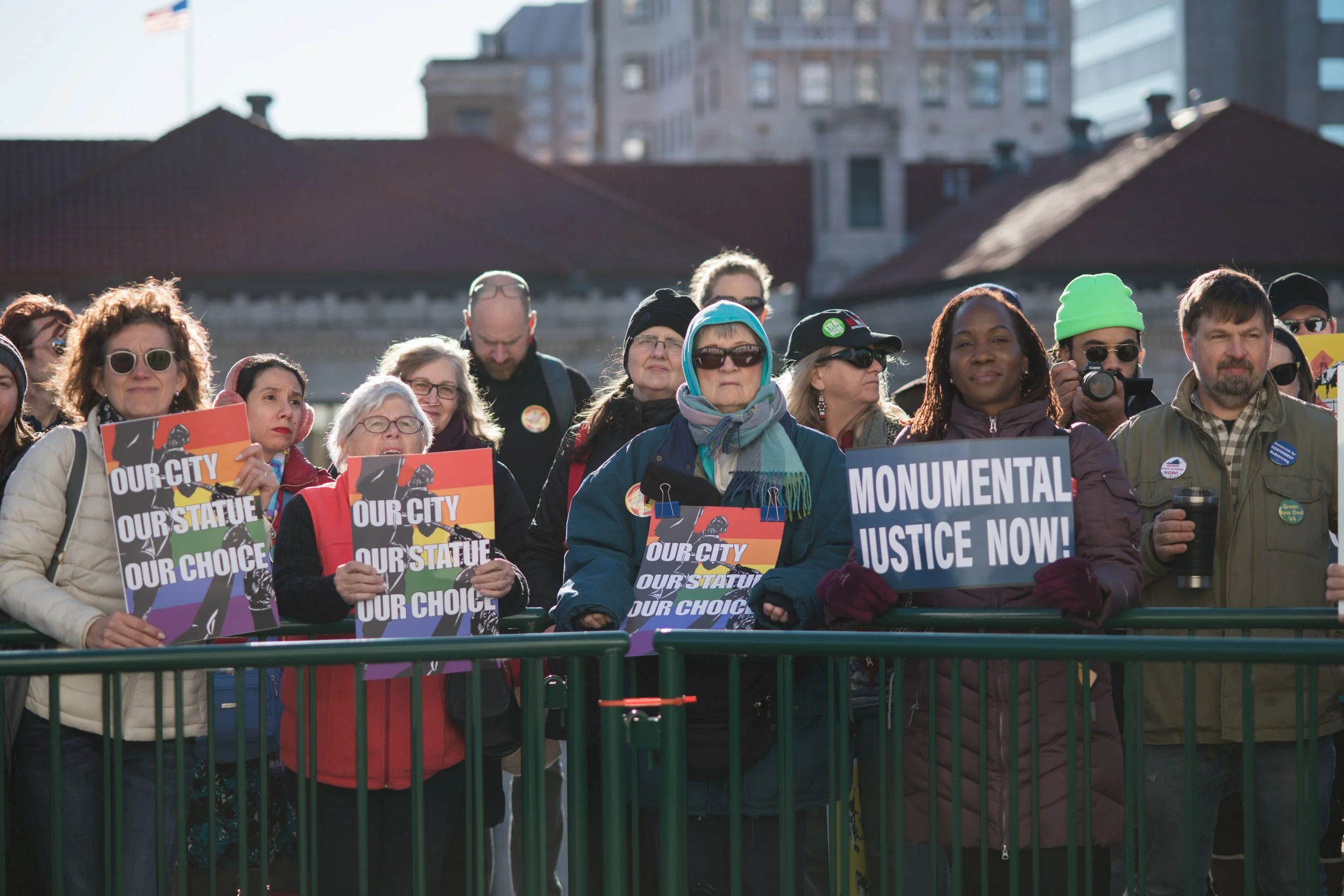
A crowd holds signs that read, “Our city. Our statue. Our choice.” In 2021, the Virginia Supreme Court further affirmed the right to remove Confederate monuments, rejecting lawsuits that sought to block the removal of the Lee statue in Richmond. Attorneys argued that a small group could not force Virginia to maintain a monument that doesn’t reflect its values. Six days later, the Monument Ave. statue came down—proof that the law, and the landscape, could change.
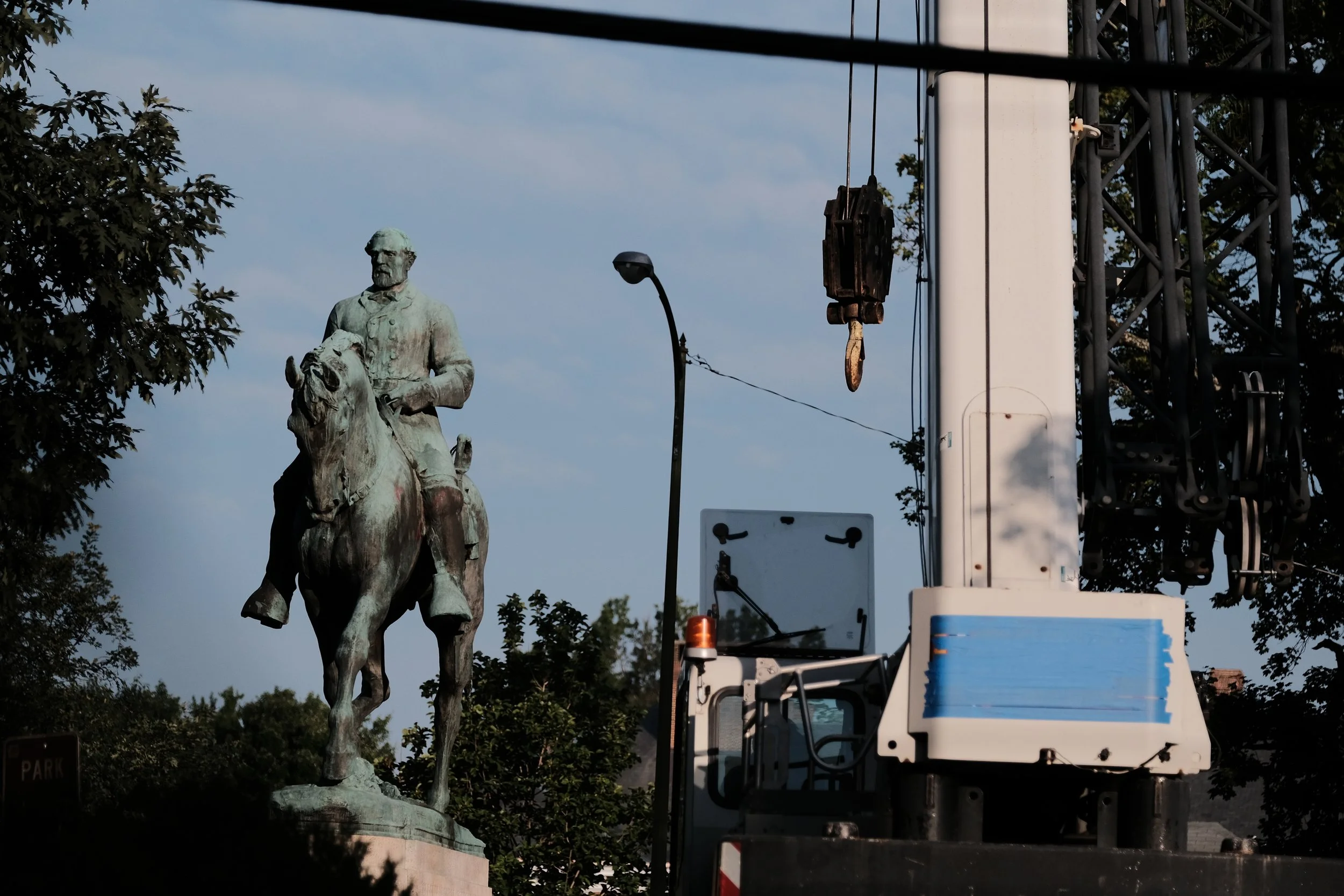
On July 10, 2021, the statue was removed from Market Street Park by Team Henry Enterprises, a Black-owned contracting company that had removed Richmond’s Monument Ave statues one year earlier. What had been defended for decades in bronze, now faced a new reality: it could be lifted, moved, and reconsidered.
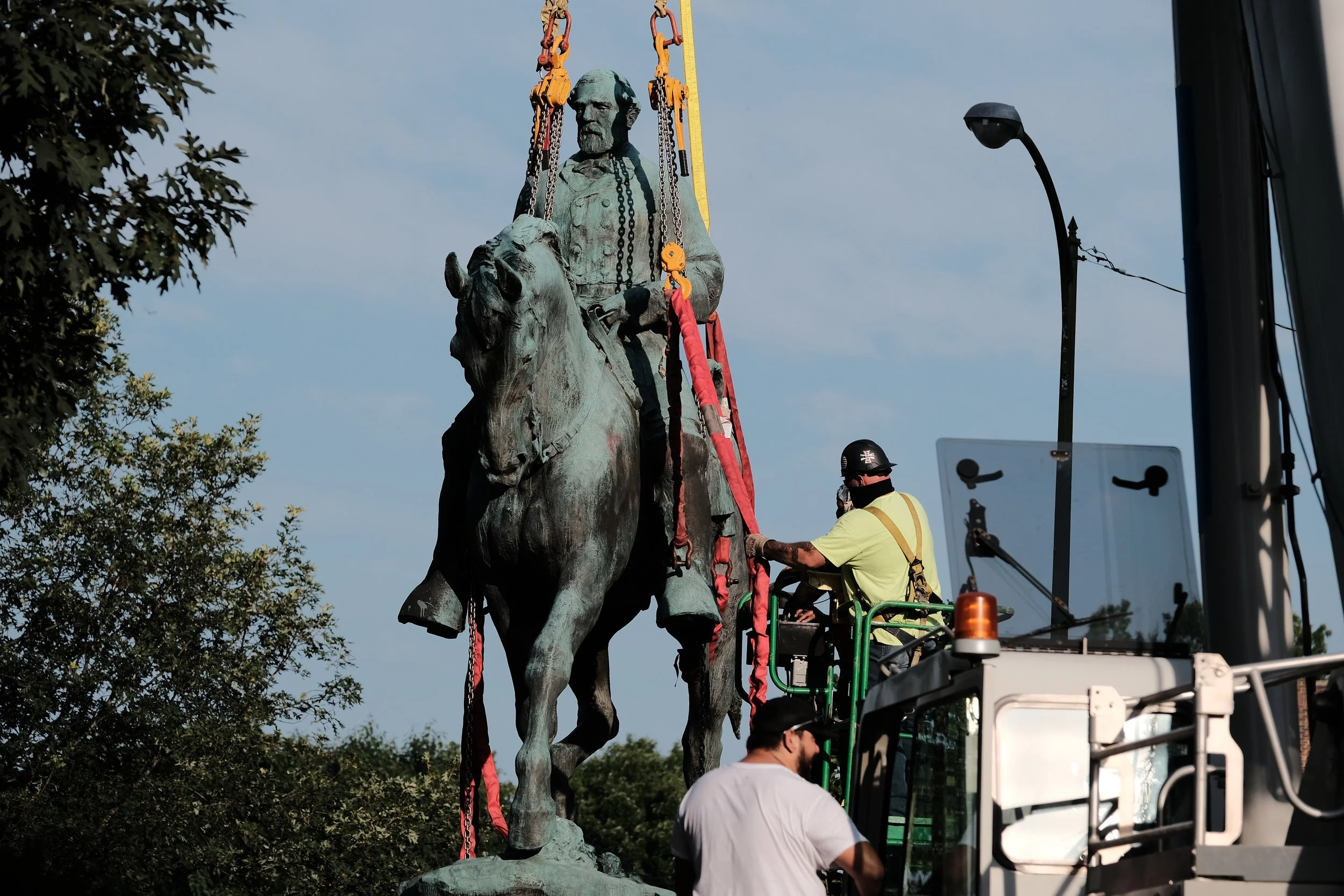
As orange straps cinched the bronze statue and workers steadied it, removal became about logistics: rigging, balance, and control. That same day, Team Henry removed Charlottesville’s three other city-owned statues and one owned by the University of Virginia. Once the monuments were down, the City announced a call for applications—shifting the question from—Can it be removed?—to now: Who will take responsibility for what comes next?
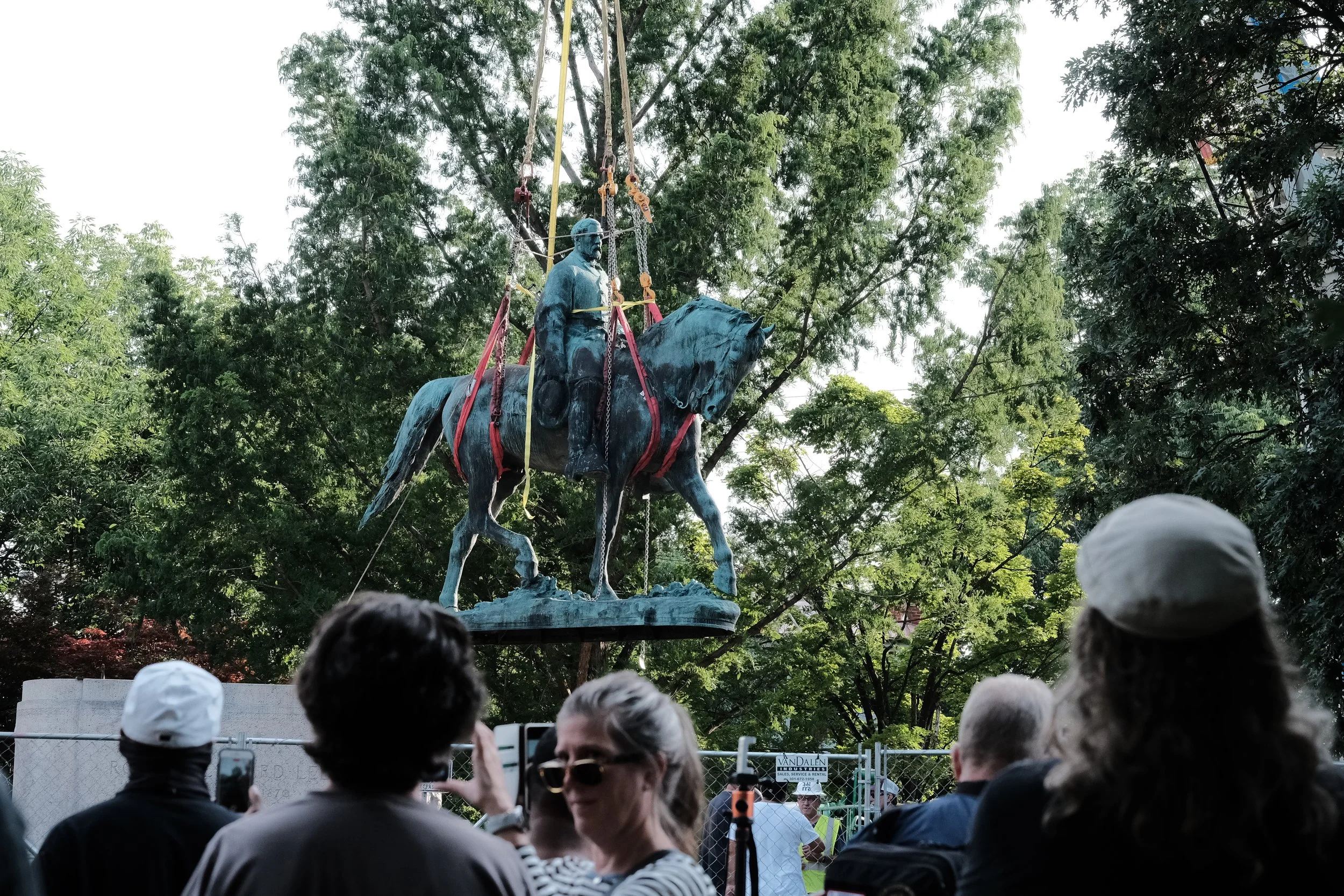
As the statue was lifted, the scene turned into a public record: straps taut, cameras out. Slowly the bronze shifted from symbol to cargo. Once down, the fight turned from the street to paperwork and planning. By the time Lee was lowered to the flatbed, organizers were ready, having spent most of the year identifying possible foundries and mapping out transport logistics. The finalized application submitted in late October was backed by 23 individuals and organizations.
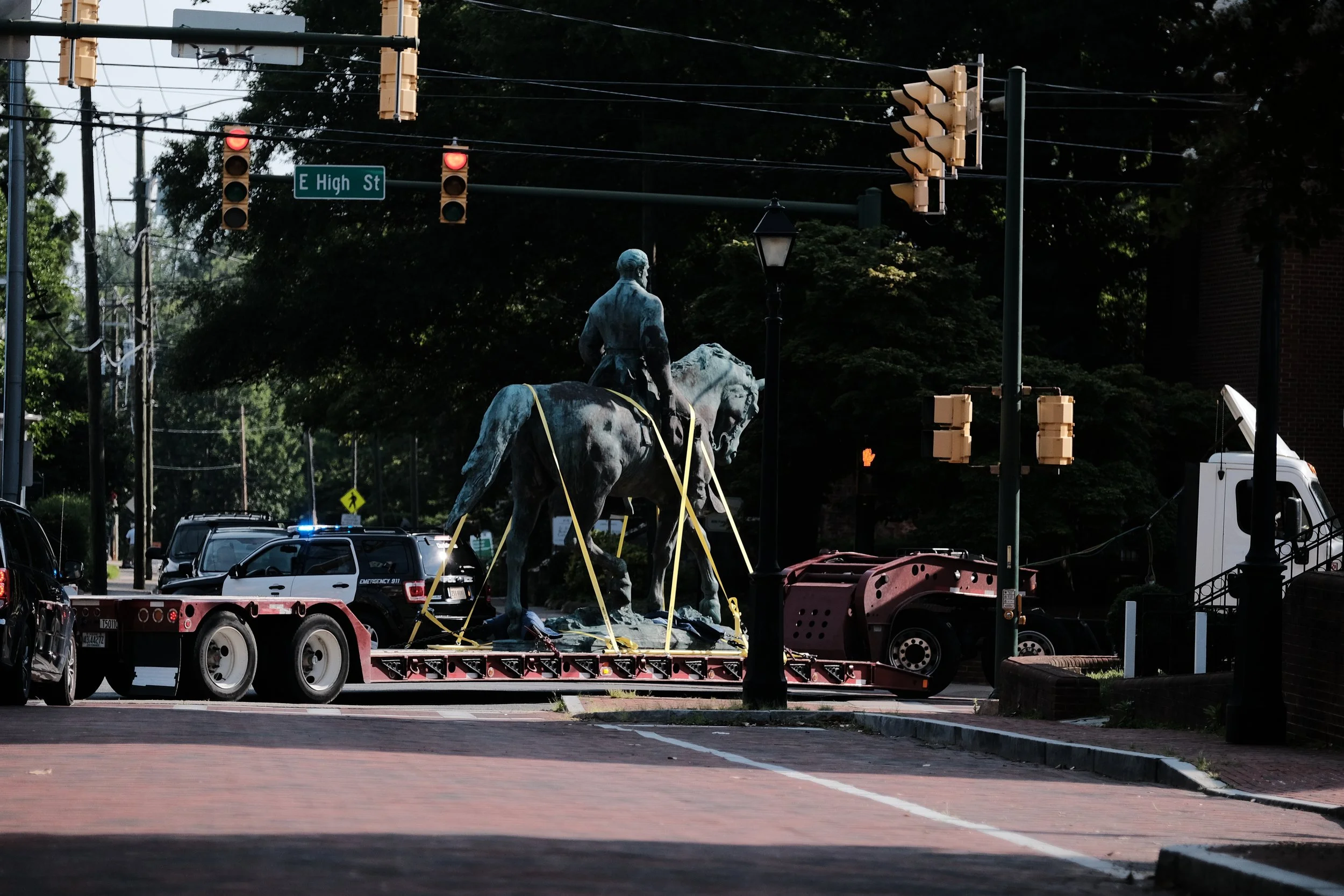
Small against the streetlights, Lee rides strapped upright on a flatbed; no longer a fixture of the park, but something in transit. Six applicants stepped forward to request possession of the statue: the JSAAHC, Statuary Park at Gettysburg; Frederick Gierisch; Ratcliffe Foundation; LAXART (now The Brick); and the Trans-Allegheny Lunatic Asylum. On December 7, City Council unanimously deeded it to the Jefferson School African American Heritage Center.
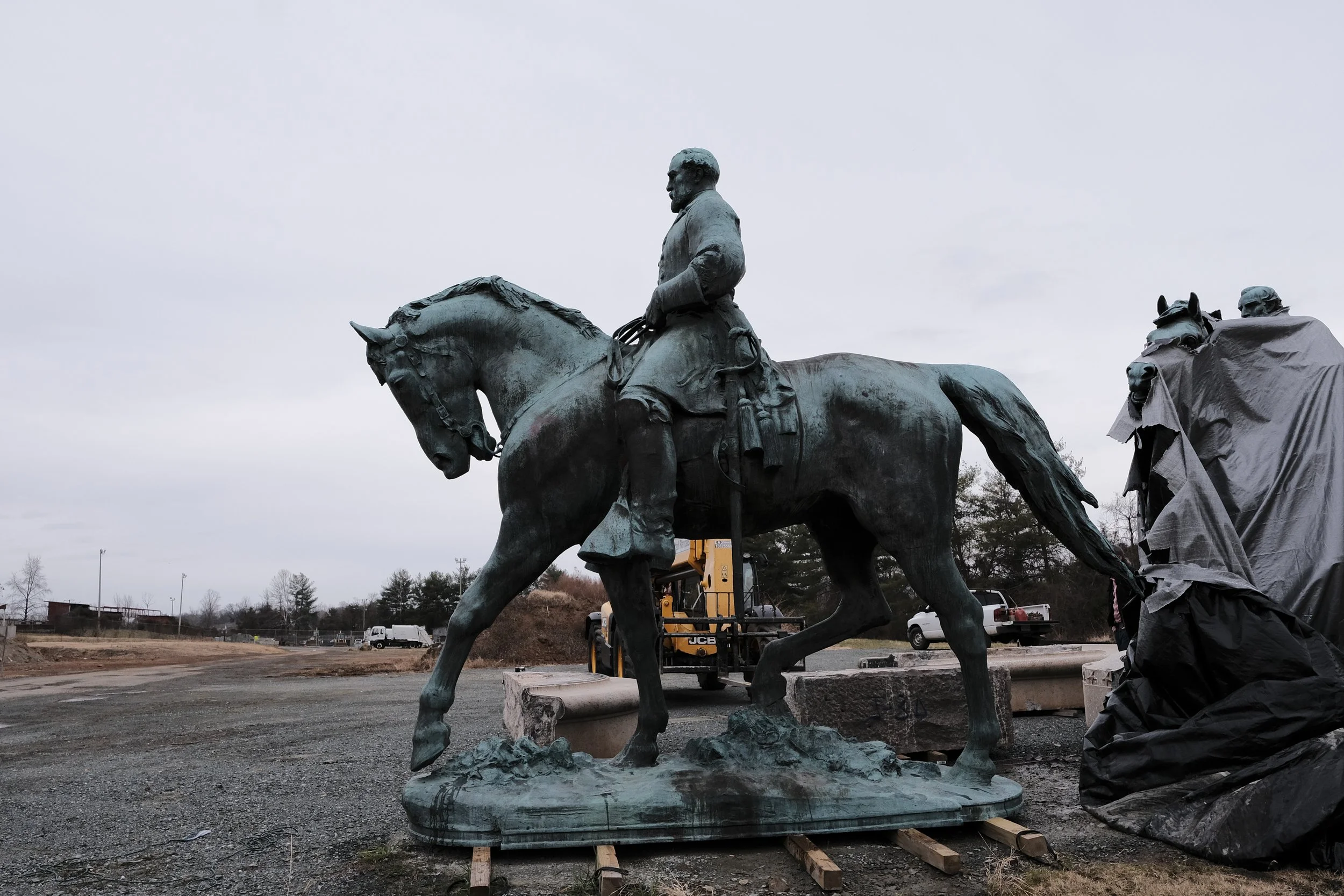
On December 18, 2021, in a quiet, undisclosed location, the Lee statue rested on timbers—still intact, but no longer public. Its dismantling began under overcast skies that slipped into a light drizzle. What had stood as a fixed landmark was now a worksite: crews, equipment, and a plan to turn one monumental form into movable parts.
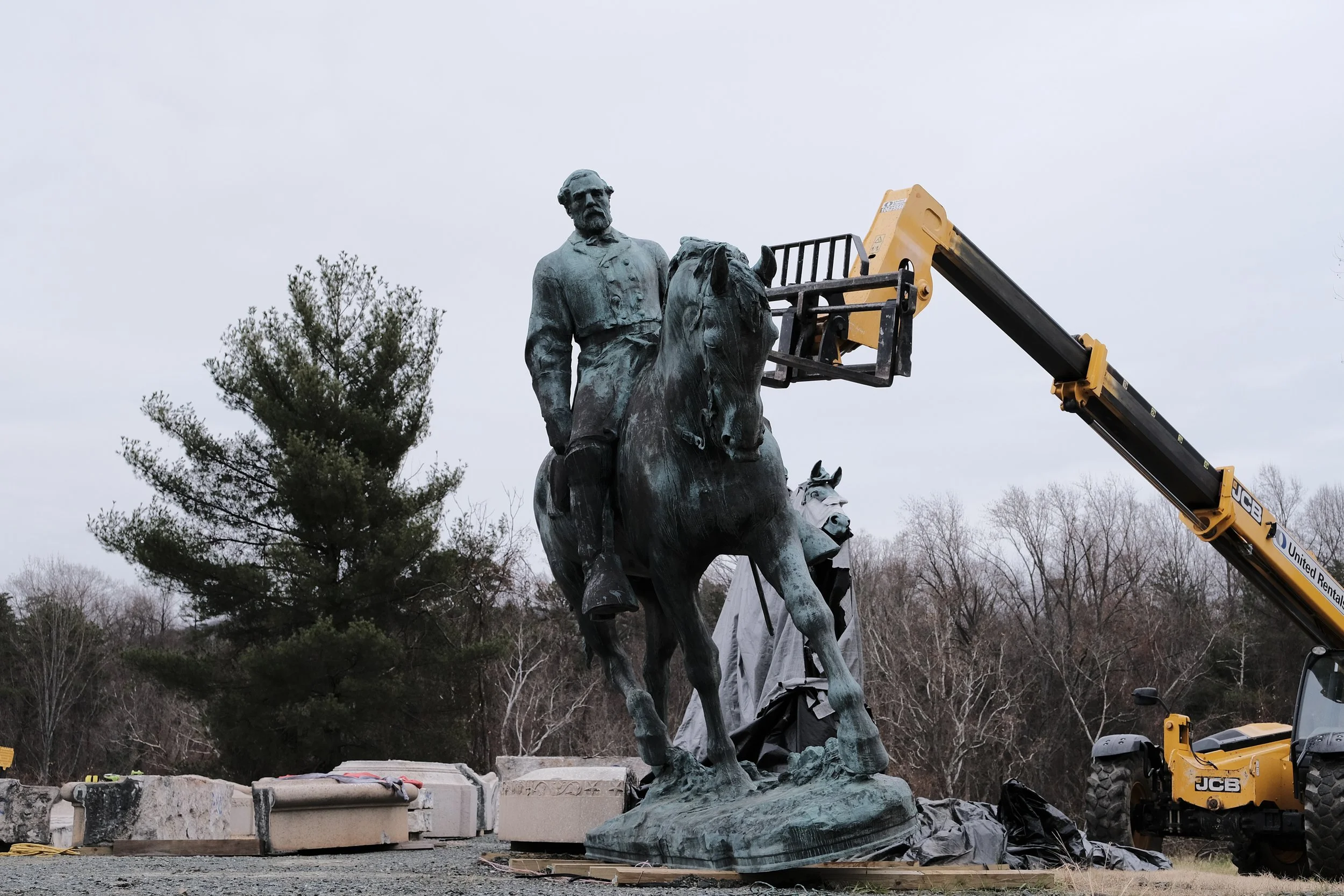
Here the plan becomes visible. An articulated lift reaches in as the bronze tilts, held in place without pedestal or ceremony. The work stretched into the night: separating the horse from its base, cutting legs and tail, removing the head—steps required not for spectacle, but for transport. The statue’s next chapter would take time: moved three times, then finally melted three years later.
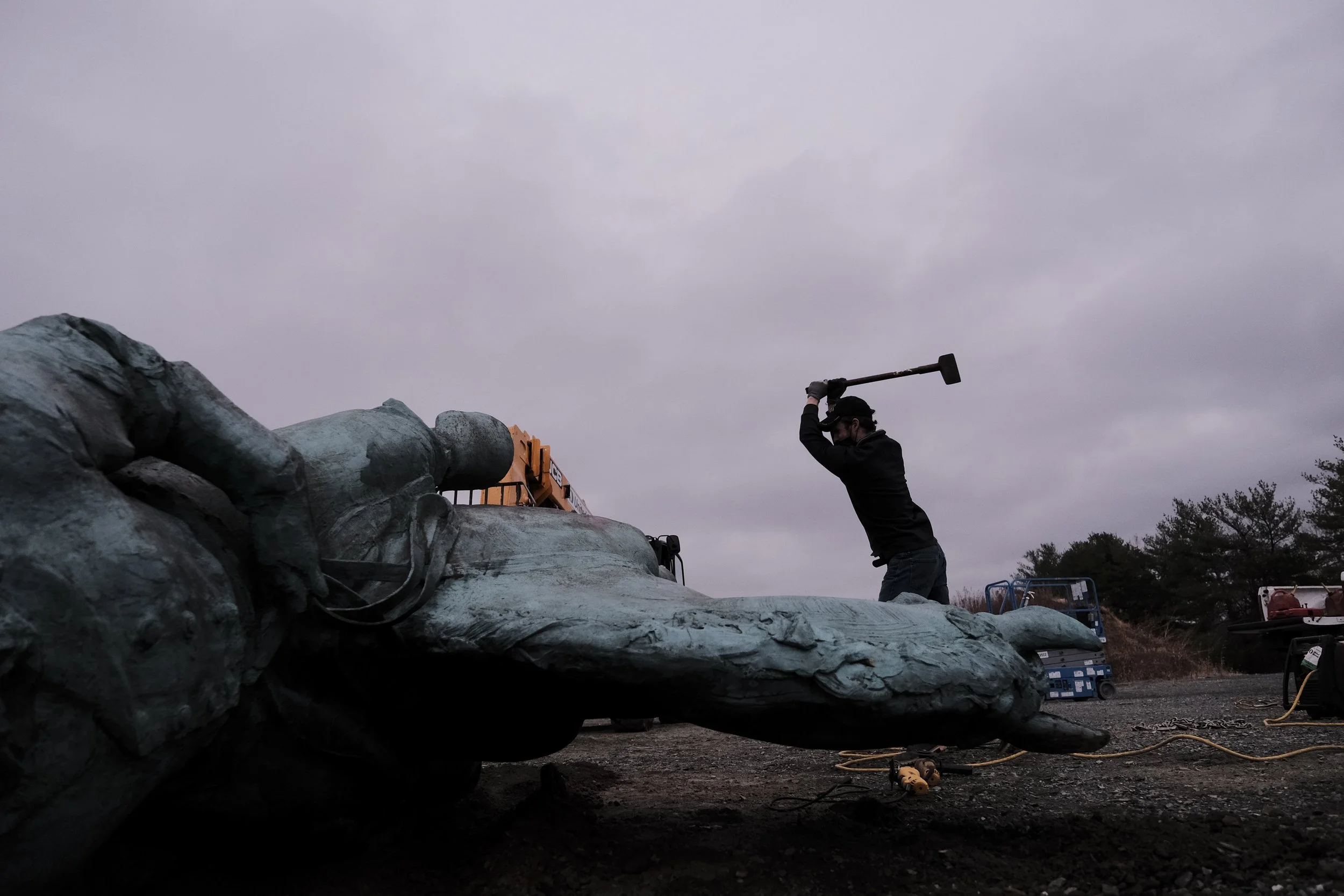
As a worker raises a sledgehammer —the statue is reduced to matter, shape, and force. This became dismantling as irreversible action: breaking what once projected authority into steps that make melting possible. But even as the statue was being taken apart, its future was contested in court. Four days later, on December 22, 2021, Trevellian Station Battlefield and the Ratcliffe Foundation filed suit to try to undo the gift.
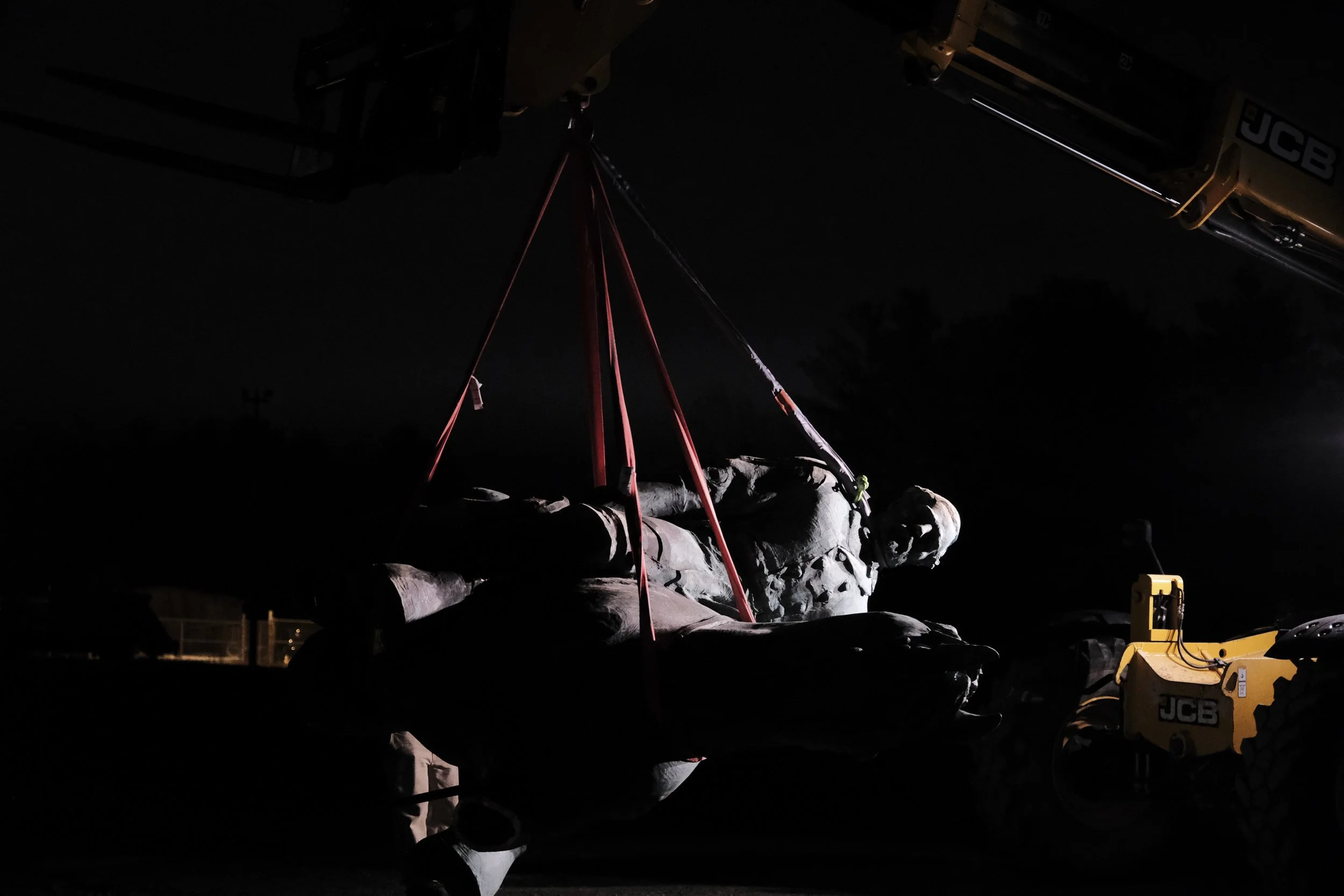
In this night scene—straps taut under floodlights—the dismantling continued even as a new fight opened. The plaintiffs argued that Charlottesville violated the 2020 amended monument law, pointing to its language about relocation to a “museum, historical society, government or military battlefield.” They claimed the Jefferson School African American Heritage Center’s plan to take the statue to a foundry—to cut and melt it—fell outside that intent, and that the City was negligent for knowing those plans.
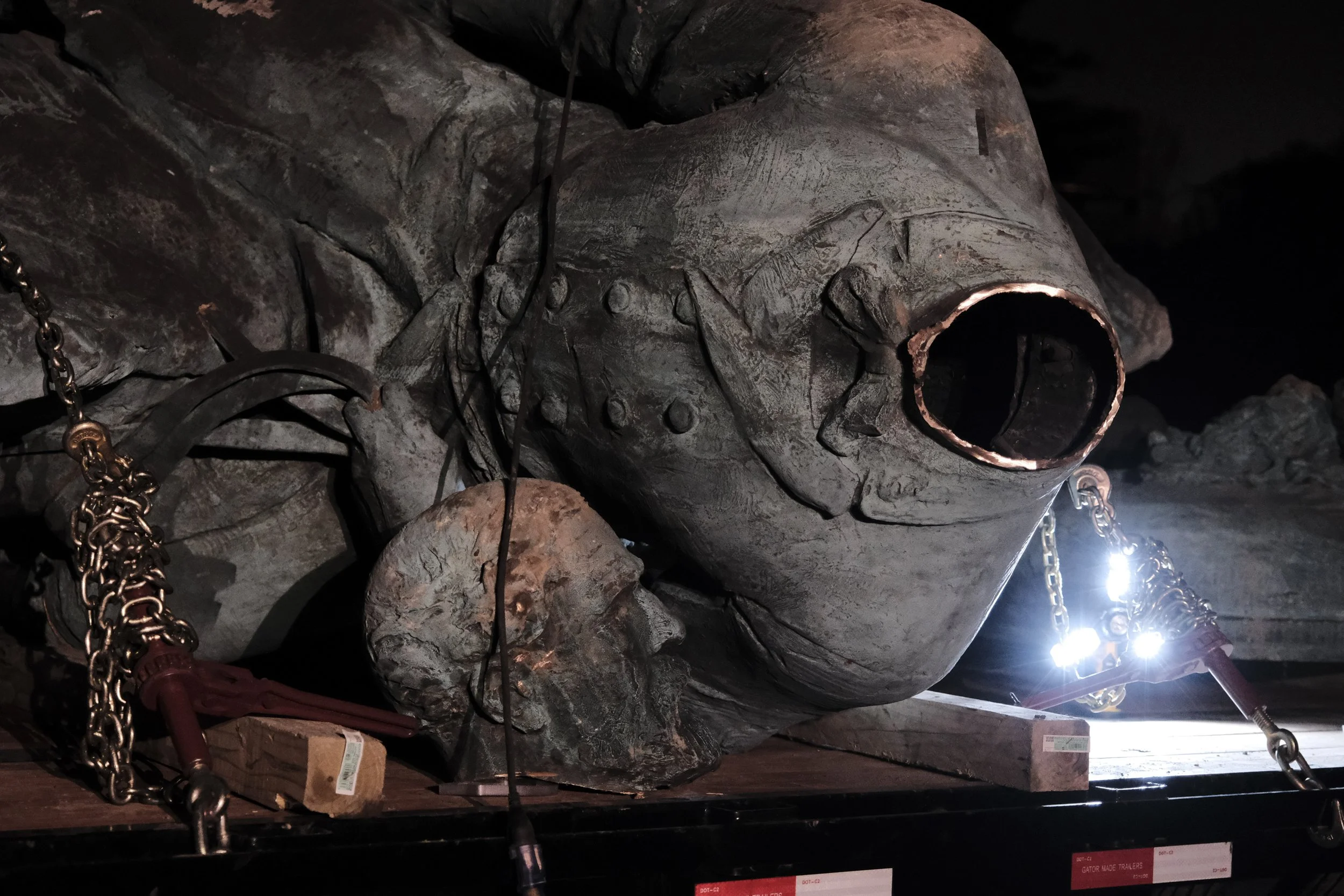
In close-up, the monument is no longer a figure on a horse but a hollow shell—bronze opened, chained down, lights flaring against raw edges. The lawsuit slowed what came next. In early proceedings, the JSAAHC was removed from three counts, but plans for transformation stalled while litigation continued. The case ended in favor of the City and the JSAAHC on September 26, 2023. One month later, Swords Into Plowshares restarted—turning bronze into usable material for new public art.
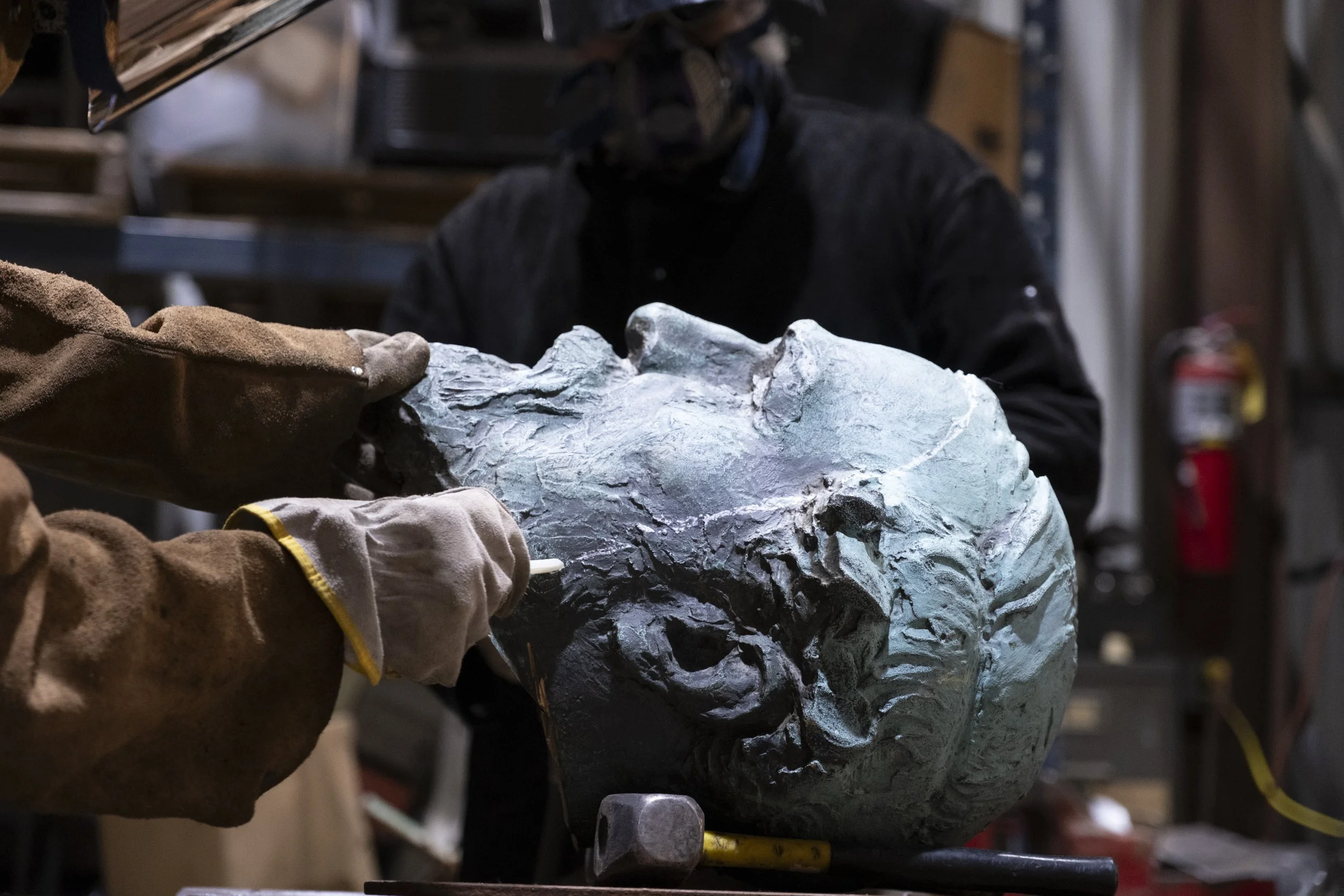
Lee’s head sits on a work surface like a detached artifact—still recognizable, but stripped of elevation and aura. Up close, the face reads differently: not as a statue or a symbol, but as a piece of cast bronze, handled by gloved hands and tools. The discernible chalk lines on the side of the head mark the next cut and recalls the tradition of the death mask, historically made to preserve a likeness. In the crucible, this likeness will be reshaped by heat.

In the dark, the story becomes light: a welder’s arc and a spray of sparks cutting through bronze. This is precision work, done inch by inch, seam by seam, converting a single dominating form into pieces to be processed into material available for a new work. The spectacle is gone; what remains is heat, sound, and labor—making change irreversible at the level of material.
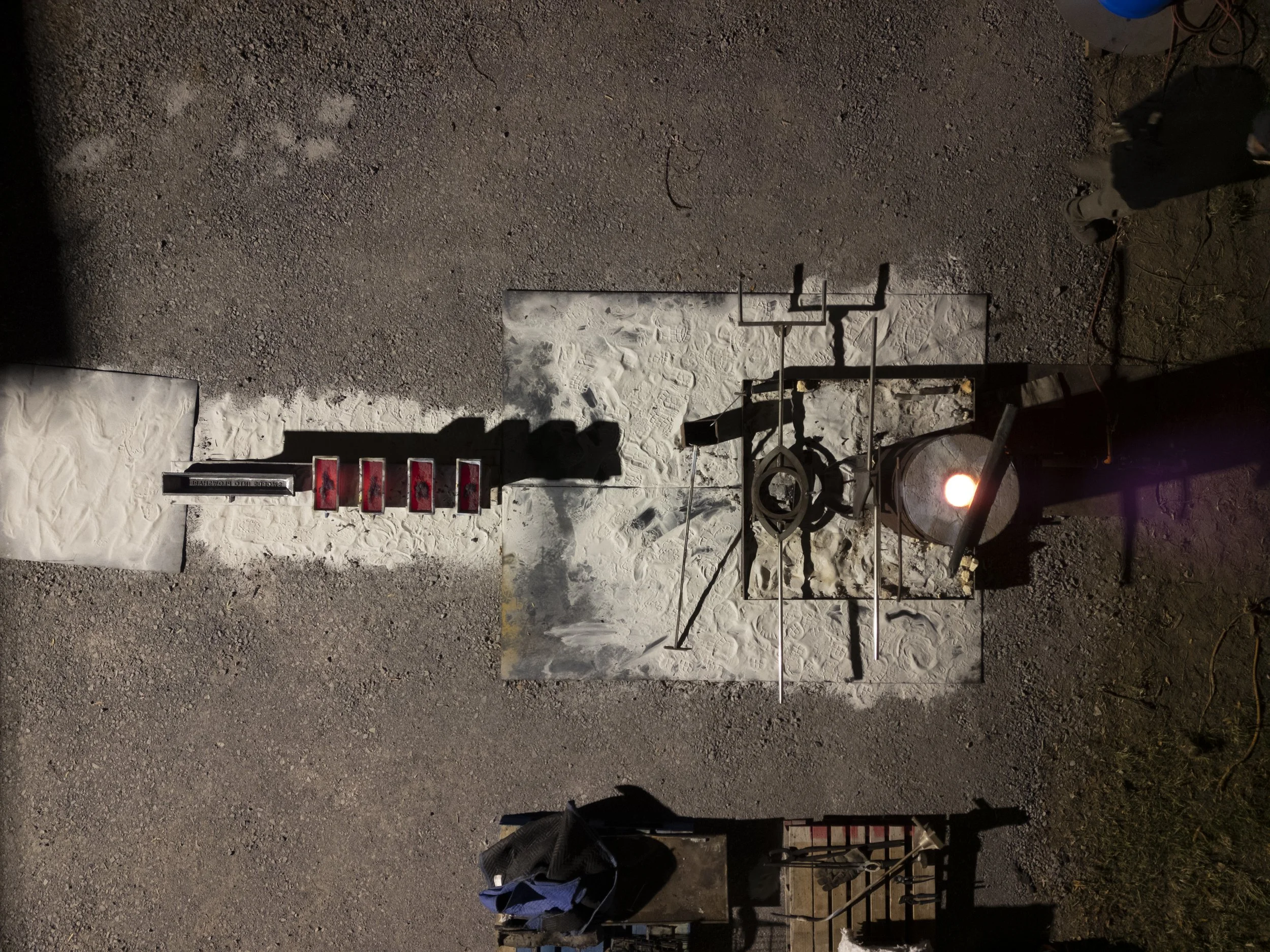
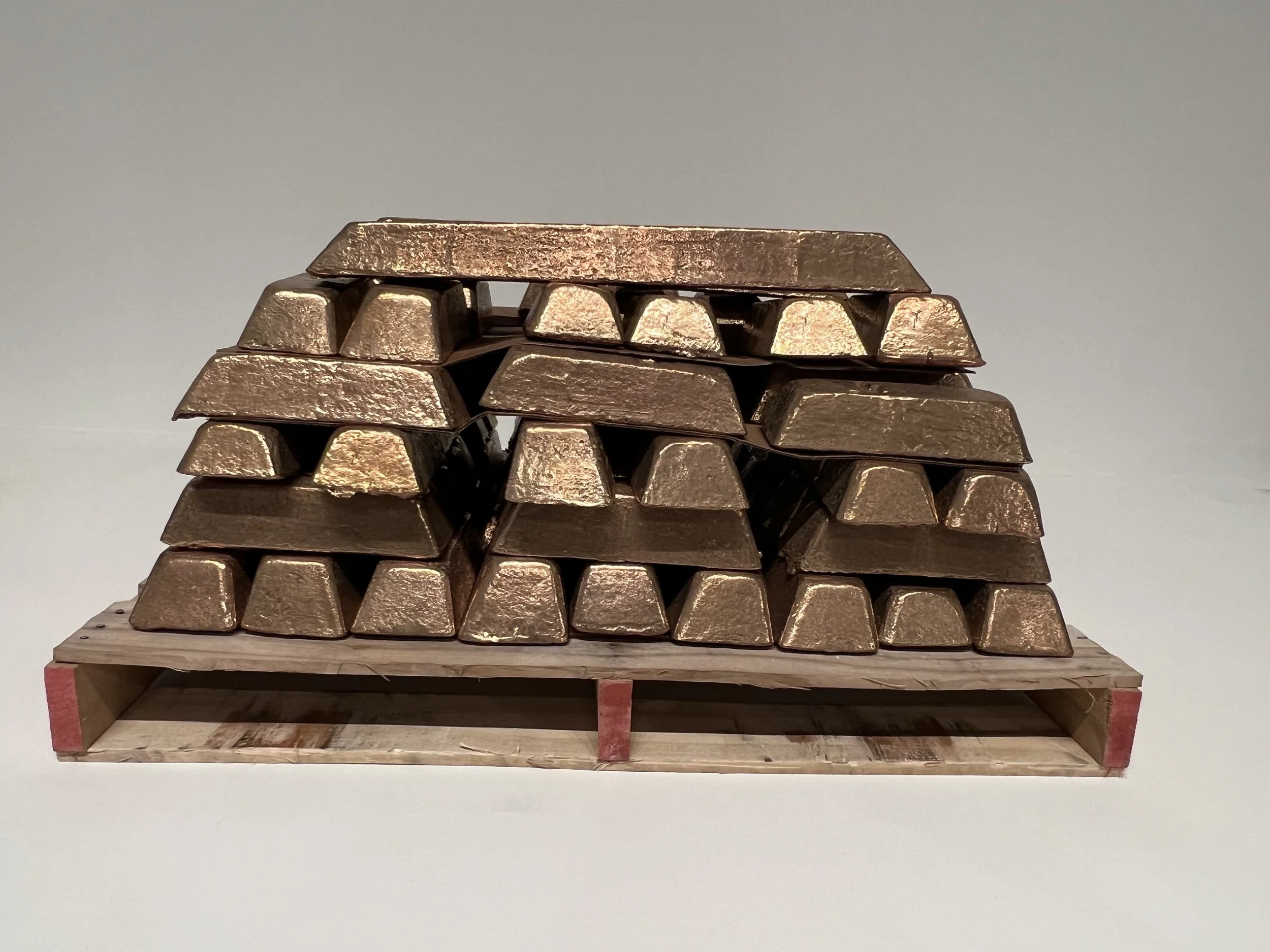
After its initial melting, the bronze went through additional purification to remove toxins from nearly 100 years of open-air exposure. In the end, the Lee statue was transformed into two tons of red-brick bronze. The process of recasting history, the law and our understanding of the impact of White supremacy, has made way for our next stage–reclaiming the narrative of place through a democratic process. From here, meaning will be built collectively, creating welcoming public spaces for all.
Reclaim
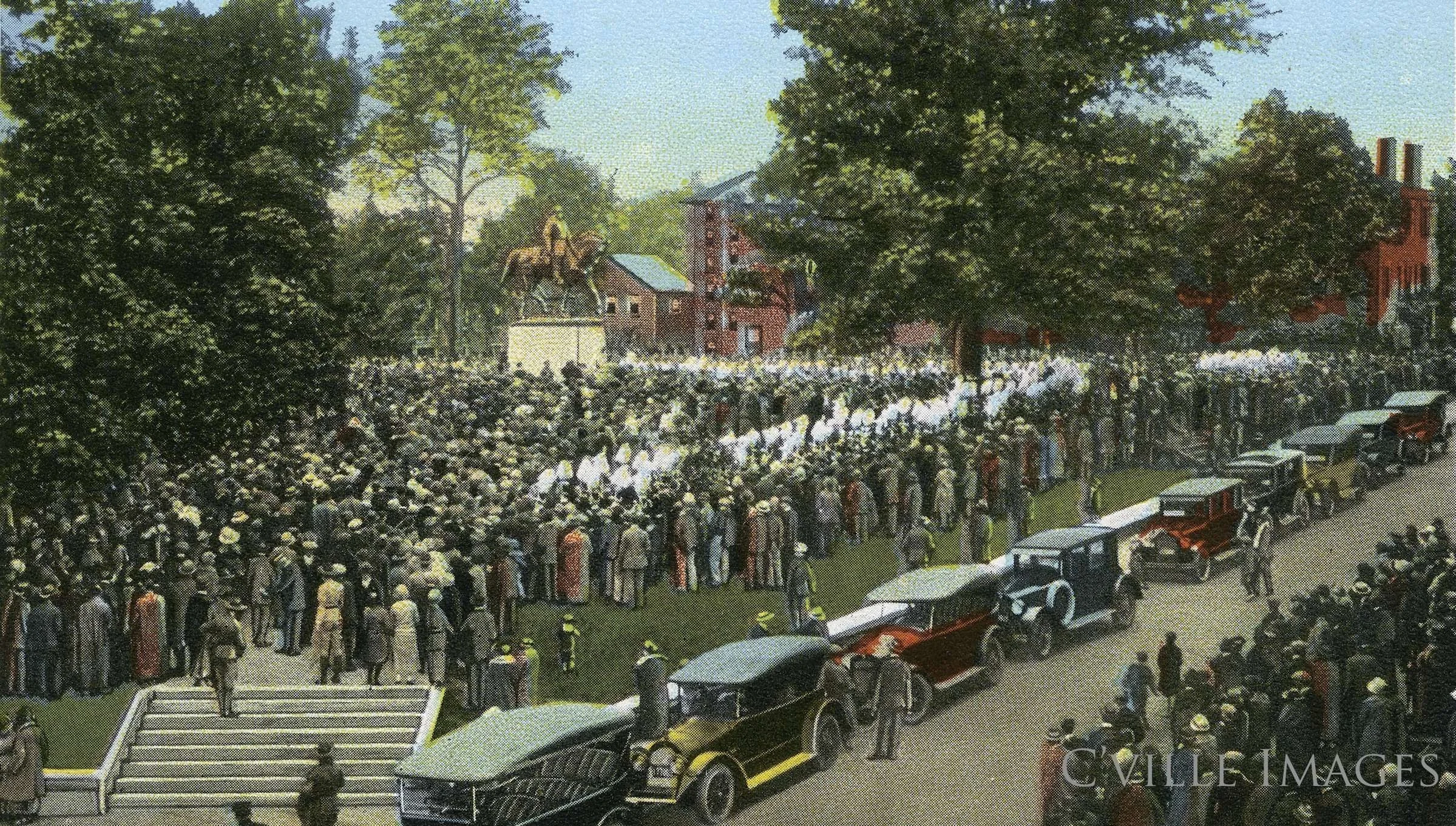
When the statue of Robert E. Lee was unveiled in Charlottesville on May 21, 1924, it stood as a towering symbol of the Lost Cause, a White supremacist narrative crafted after the Civil War to recast the Confederacy’s defeat as honorable and slavery as benevolent.
The Lee statue was part of a larger civic campaign financed by Paul Goodloe McIntire, who commissioned multiple bronze monuments from sculptors affiliated with the National Sculpture Society.
At the same time, in the era of “City Beautiful” planning, McIntire formed Charlottesville’s first park system by buying and donating land, creating the public spaces where several of the statues would stand for nearly a century.
This landscape of monuments and leisure unfolded as national, state, and local governments created the legalized systems known as Jim Crow. By 1926, when Virginia legally segregated races in public spaces through the Public Assemblages Act, McIntire had gifted the city a total of 159 acres of “public” park land—147 acres for White residents, 12 acres for Black residents.
McIntire’s park-making unfolded alongside a national turn toward parks as a civic ideal. But as the park movement grew in the 1930s, “public” space did not become more equal—it became more regulated and exclusionary. Across the country, race politics shaped where, and how, leisure was permitted, who could gather without harassment, at what times of day, and which communities were meant to feel at home in the landscape.
Charlottesville's early park system sits on much older ground. When McIntire purchased and donated land, he was assembling parcels that, within living memory, had been plantations shaped by enslavement. On the eve of the Civil War, Albemarle County was home to 13,916 enslaved Black people.
More than 300 plantations once spread across Albemarle County, and 19 sat within what are today Charlottesville’s city limits. The land that formed McIntire and Washington Park, for example, derived from the Rose Hill plantation, while Belmont park was formed from the Belle Mont plantation. These were once majority-Black landscapes—sites filled with extraction, pain, and determination—before they were remade as segregated “public” parks.
These histories are important in considering where a new work of public art can be placed. As an act of reclamation we embarked to research the social histories of five parks. Each one help establish the local park system: Lee (1917), Jackson (1919), Belmont (1921) and McIntire(1926) parks, all designated as White parks and Washington Park (1926) for African Americans.
Storymap
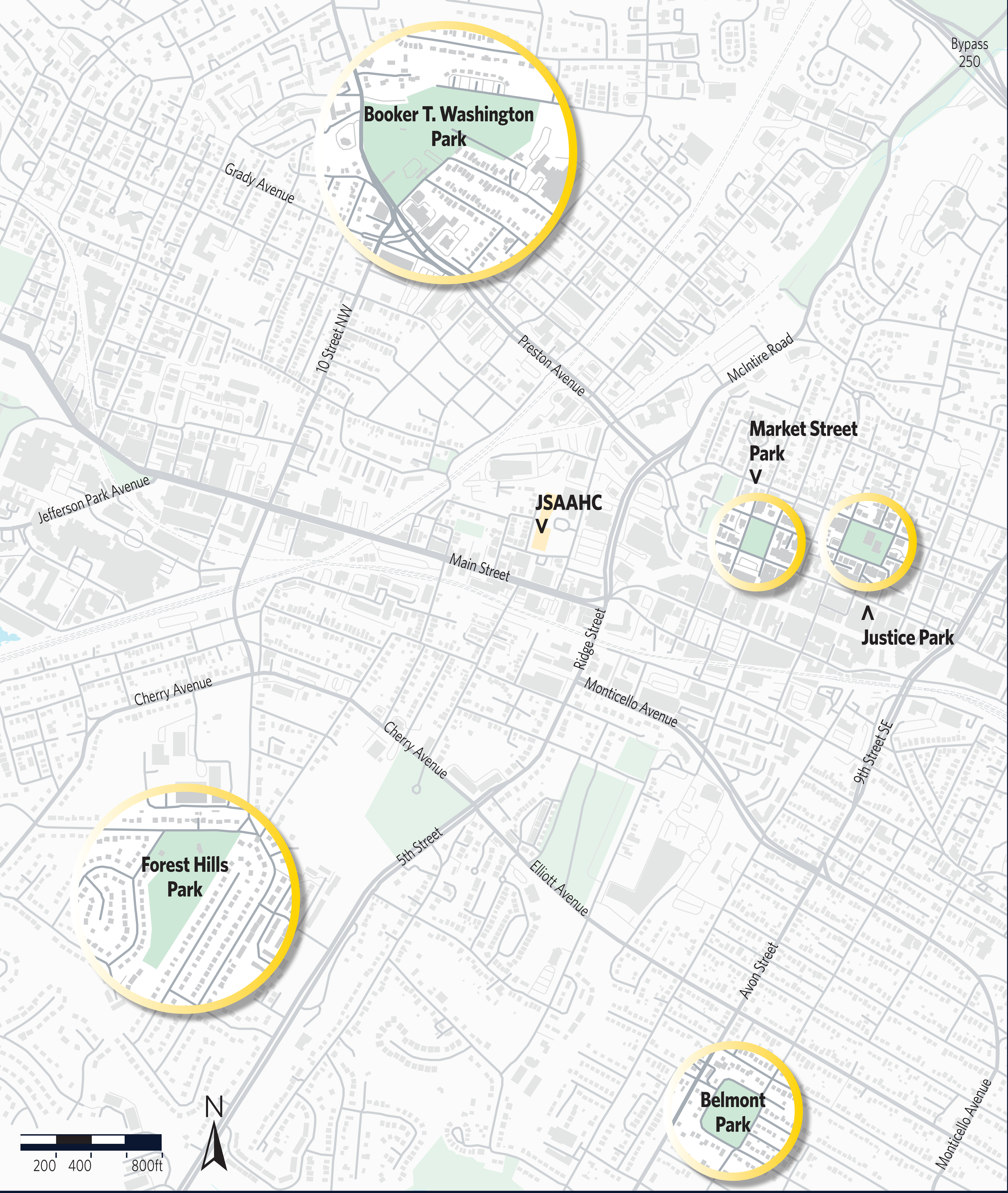
Today, Charlottesville’s parks are often described as civic gifts—places to gather, play, and breathe. But they also served as a public curriculum. Built on plantation land and shaped by planning, monuments, and segregation, they reveal who was invited in and who was pushed out.
1) Market Street Park
Once part of Del. Valentine Southall’s plantation, where he enslaved eight Black people. Later home to UVA professor and Lost Cause propagator Charles Venable. In 1917 McIntire bought and gave the land to the city as a park.
2) Court Square Park
For 100 years Black people were bought and sold here. In 1918 McIntire purchased the land for a Thomas “Stonewall” Jackson statue and park, destroying a Black community and grocery.
3) Booker T. Washington Park
Once part of Rose Hill plantation—formerly Pen Park plantation, where 50 Black people were enslaved—McIntire donated the land in 1926 as Charlottesville’s only Black park.
4) Belmont Park
Once part of Belle Mont plantation, where 27 Black people were enslaved, McIntire transferred the land to the city “as a park and playground for white people.”
5) Forest Hills Park
Originally Oak Lawn plantation, where 19 Black people were enslaved, it was created in 1946 for white people, alongside racially restricted homes. Tonsler Park was built for Black residents atop a former brickyard.
Reclaim
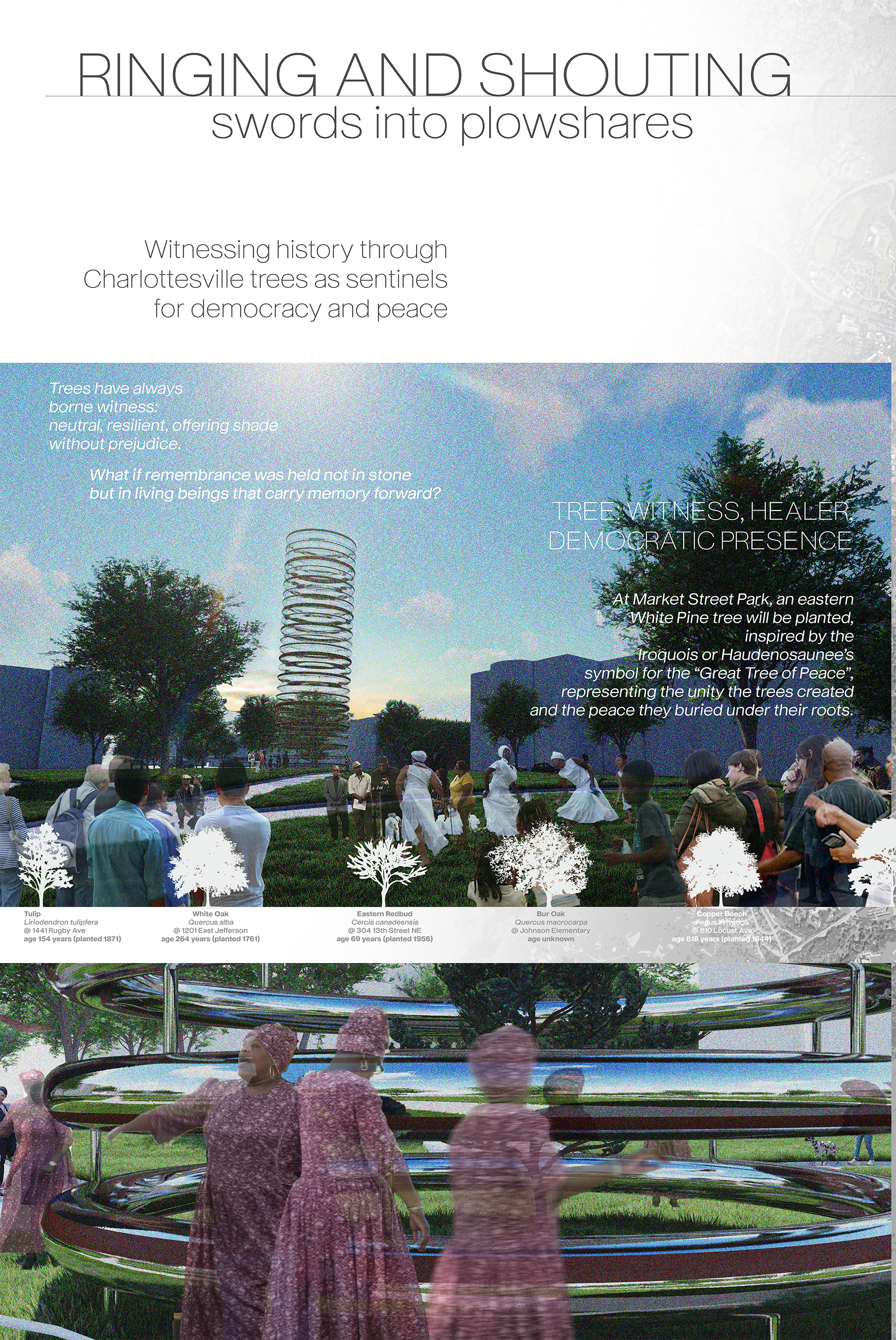
For the past 30 years, Hood Studio has created artful commemorative objects and spaces, tracing and cementing the trails and tribulations of Black lives, creating an ongoing diasporic record within the U.S.
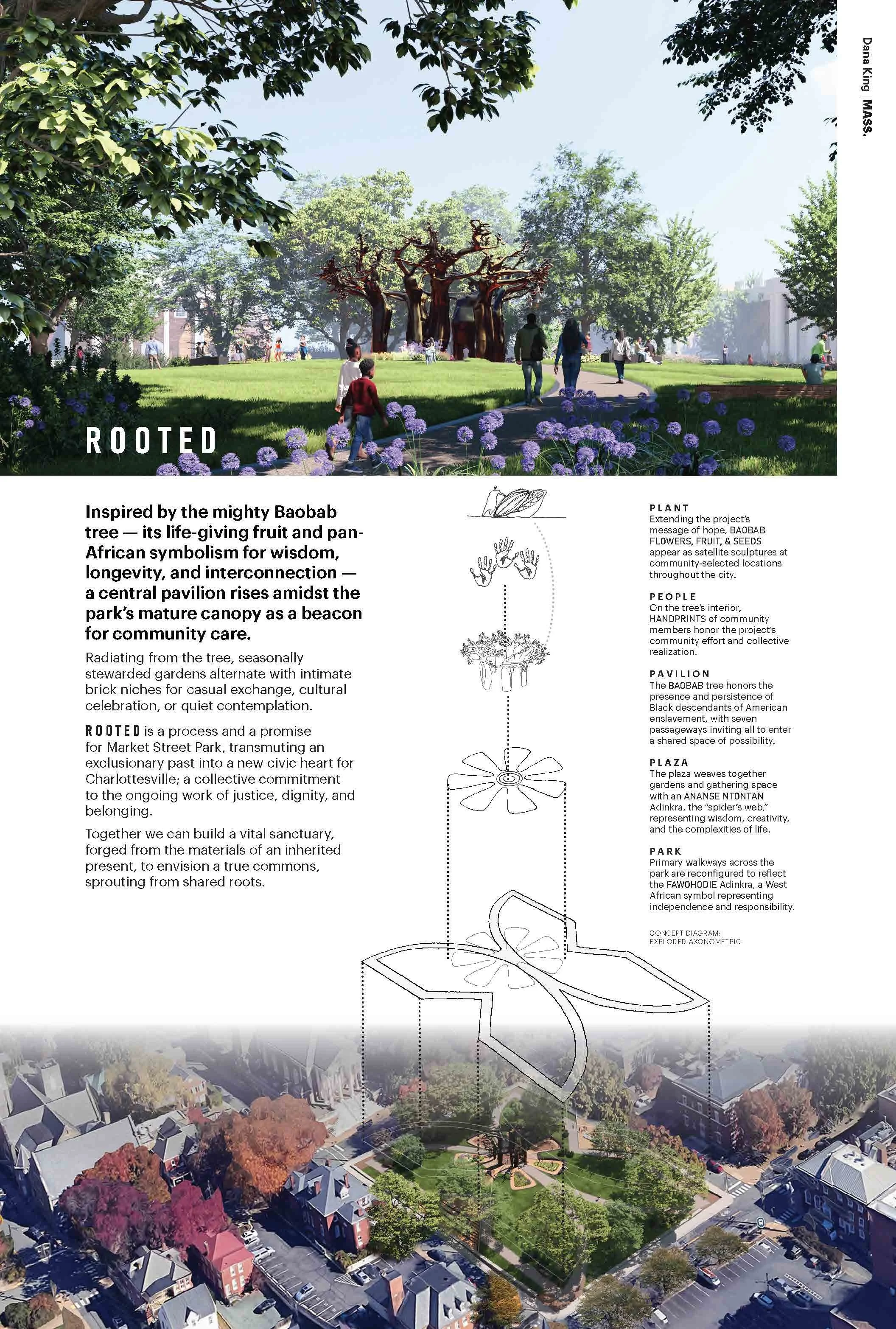
The partnership between MASS’s Public Memory and Memorials Lab and artist Dana King is devoted to combating historical erasure in the public realm.
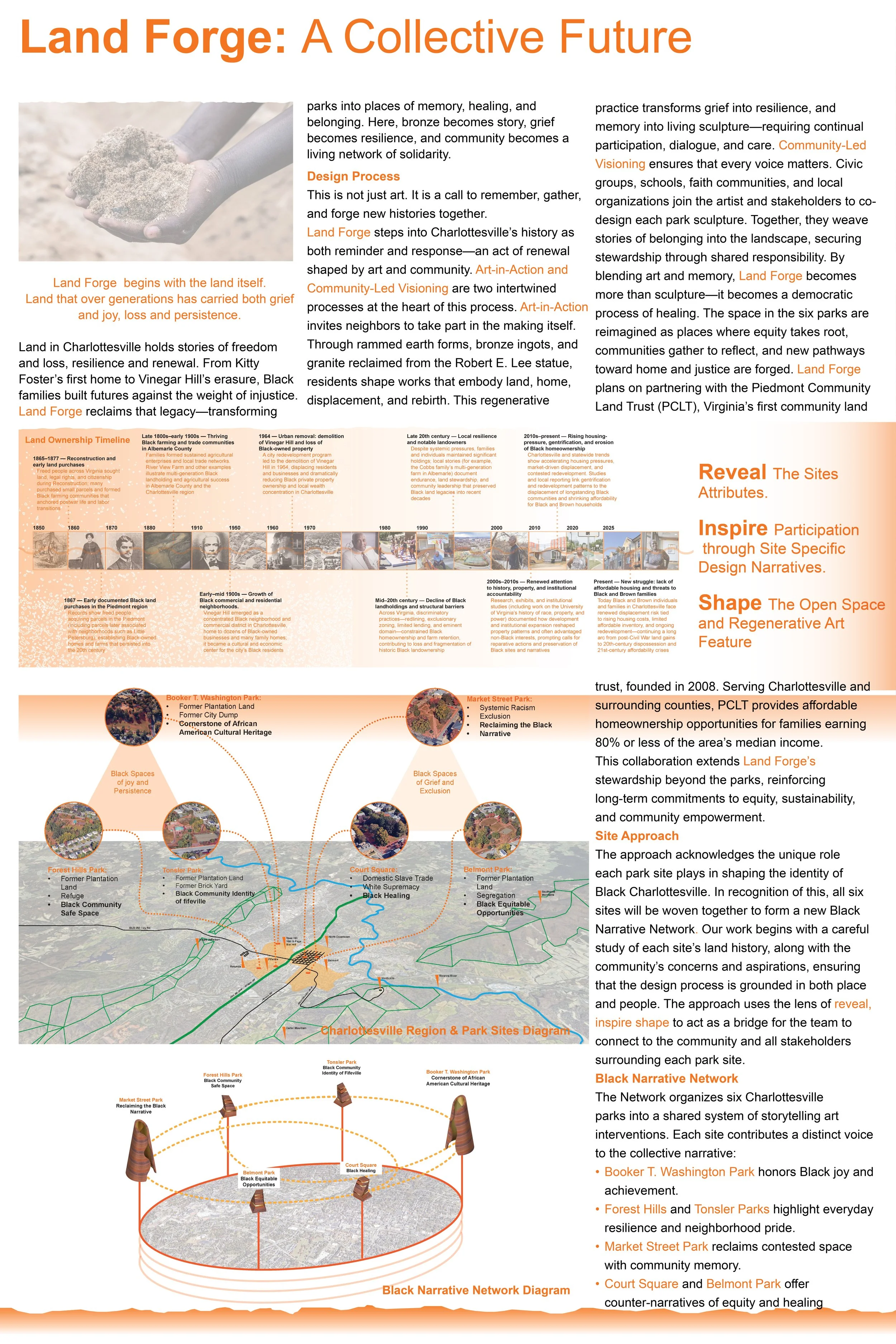
Each member of the PUSH team carries a lived commitment to memory, justice and the enduring brilliance of Black communities.